

Private Andrew Simons, Welsh Regiment

- Rank
- Private
- Name
- ANDREW SIMONS
- Regiment
- Welsh Regiment
- Date of Death
- Died 06 November 1918
Andrew Simons (sometimes Simmons) was one of fifteen children born to John Lichfield Simons and Ellen Brown who married on 23 July 1874 in Glasgow. John was some twenty five years older than Ellen and the couple lived a travelling life from the beginning of their marriage. Whilst John variously described himself as a naturalist, show proprietor and showman exhib., newspaper reports show that the business was a cinematograph exhibition and shooting jungle.
When Andrew was born in Birmingham in the spring of 1899, he already had eleven siblings. At the time of writing no baptism records have been identified, and the first time that Andrew is seen on a census return was in 1901. At that point the family was housed in five caravans on the market ground at Heywood in Lancashire. Ten offspring were still at home, including Andrew's younger brother Ernest. Andrew was just four years old when his father died at the beginning of 1903 aged 74. The family was based at the Pleasure Fair on Beast Market in Wrexham at the time and John's funeral was reported in the travellers' newspaper, World's Fair.
It should be noted that amongst the mourners were the parents of Private Leonard Greatorex, so it is highly likely that Leonard knew Andrew from an early age. By the time the 1911 census was taken Andrew's mother was living at Dee Bank, Bagillt, Flint. Recorded as the head of the household, and with five of the older offspring at the same address, she was keeping the family business going at the picture house. The two youngest children, Andrew and Ernest, were staying with their sister and brother in law at 22 Adderley Road, Leicester.
It isn't known when Andrew went back to his mother and older siblings, possibly when he left school. He went into the family business, and was still earning his living as a travelling showman when he enlisted in the army at Birkenhead, giving his address as 77 Argyle Street.
On 21 May 1917 Andrew had his medical examination, declaring himself to be 18 years and 60 days old, which would indicate that he was born on 22 March. He was 5'5¾" tall with a 34" chest and weighed 122 lbs. His physical development was described as fair, with a note that it would improve with training, and he had a fair complexion, hazel eyes and brown hair. Having been issued with service number 65263, Andrew was posted to 74th Training Reserve Battalion of the British Army for his initial training.
On 1 November 1917 Andrew was transferred to 51st (Graduated) Battalion (Welsh Regiment)Training Reserve where he would continue his training until he reached his 19th birthday and was officially old enough to serve in active combat overseas. He was given seven days draft leave from 18-24 February 1918.
Unfortunately, Andrew did not return to his battalion until just after midnight on 28 February. His punishment for returning four day late was ten days Field Punishment No.2 - he could have been kept in handcuffs, fetters, or irons (or ropes/straps) to restrict his movement and would have to perform all of his regular duties; march with his unit, carry his full arms and equipment and take on extra fatigue duties.
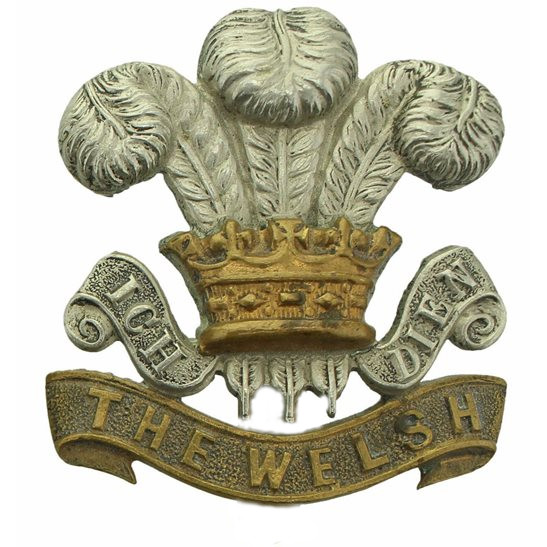
Andrew was posted to 2nd Battalion the Welsh Regiment and embarked for overseas service on 30 March. After his first few days in France Andrew was sent to join 9th (Service) Battalion, then in Brigade Reserve near Locre, where he was to serve in B section. There was to be no settling in for the new recruits; on 10 April the battalion received orders to occupy a nearby cutting to prevent a threatened enemy attack and 77 men from the battalion were killed during the ten day period.
A few days after these operations, on 26 April, Andrew reported sick in and was transferred to 3rd Australian Casualty Clearing Station on 28 April. He reported that he had been buried when a shell exploded in a trench near Kemmel, though he could not recall the precise date. Following a diagnosis of debility, he was discharged and returned to duty on 2 May .
Over the following months the battalion took part in the Battle of the Aisne and the 2nd Battle of Bapaume before advancing through Picardy, taking part in the Battle of the Selle in October. Andrew wrote a will (undated) in his pay book, stating simply 'I leave all my belongings to my mother' followed with his mother's name and address. The will was certified by an officer on 20 November 1918.
At the beginning of November the battalion was in billets near Rieux, moving out on 2 November towards Vendegies, where they were to assemble on 3 November for a planned attack. There was a last minute change of plan, when it was discovered that the enemy had fallen back and the whole battalion had to move to new assembly positions. The night of 3/4 November was a stormy one, but the following day was fine. The battalion attacked with a creeping barrage moving 100 yards every five minutes; two companies in the front line, one in support and one in reserve. Fighting went on throughout the day and into 5 November before the battalion was pulled back into Brigade Reserve.
It was at some point on 4 November, the first day of the Battle of the Sambre, that 65263 Private Andrew Simons was wounded. He would have joined the Evacuation Chain and after initial first aid near the battlefield was taken to 45th Casualty Clearing Station. Two days later on 6 November, less than a week before the end of hostilities on the Western Front, Andrew died of his wounds. He was 19 years old.
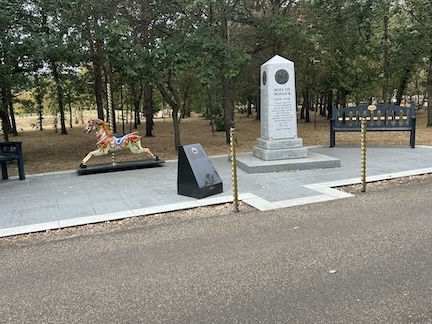
Andrew was buried in the nearby Awoingt British Cemetery, his headstone marked with a cross. When the Commonwealth War Graves Commission undertook responsibility for the proper remembrance of those who lost their lives as a consequence of the war, Andrew was given a CWGC headstone. The inscription 'Greater love hath no man than this that a man lay down his life for his friends.' was chosen by, and paid for by his mother Ellen who was then living at Fairground Alley, Anglesey. He is also remembered on the Showmen's Guild Memorial in the National Memorial Arboretum near Alrewas.
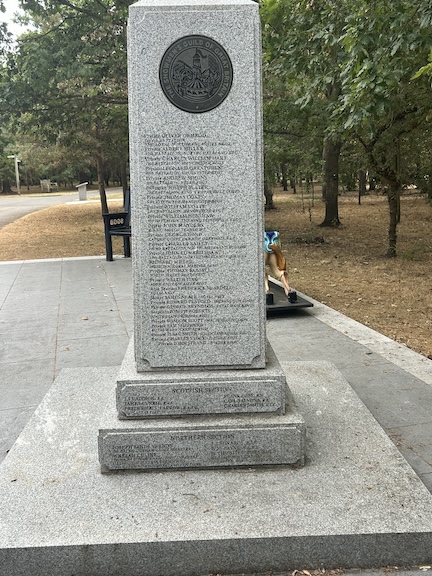
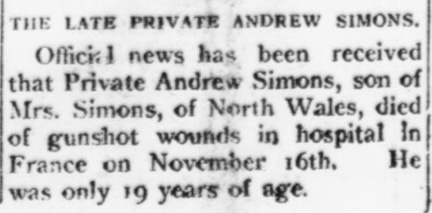
For his service to his country Andrew earned the British War Medal and the Victory Medal. His accrued pay and War Gratuity Payment of £5 were sent to his mother, as were his personal effects. 'Letters, photos, 2 religious medallions, wallet, cards, badge, 2 big cases, comb, diary, matchbox cover, housewife, razor.'
Andrews' mother was living in Flintshire in 1921 when the next census was taken, helping her son with 'roundabouts, stalls etc.' She died in 1927, aged 71, in Wrexham and is buried with her husband in Wrexham cemetery.
Loading map…

Support the Foundation
By donating to our Charitable Foundation you help us deliver projects like For Evermore, which educate and inspire future generations to remember those who gave their lives in the two World Wars. With your support, we can keep their stories alive and ensure they are never forgotten