

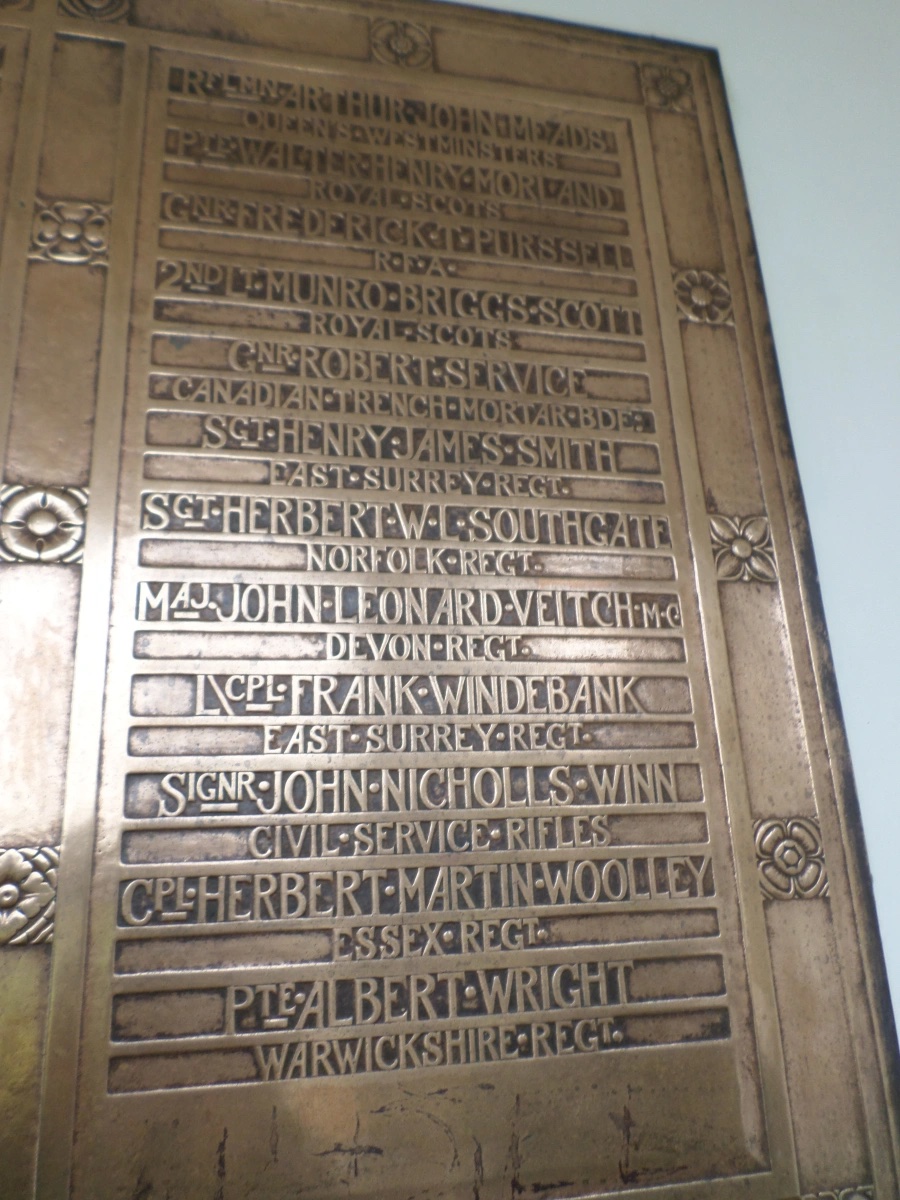
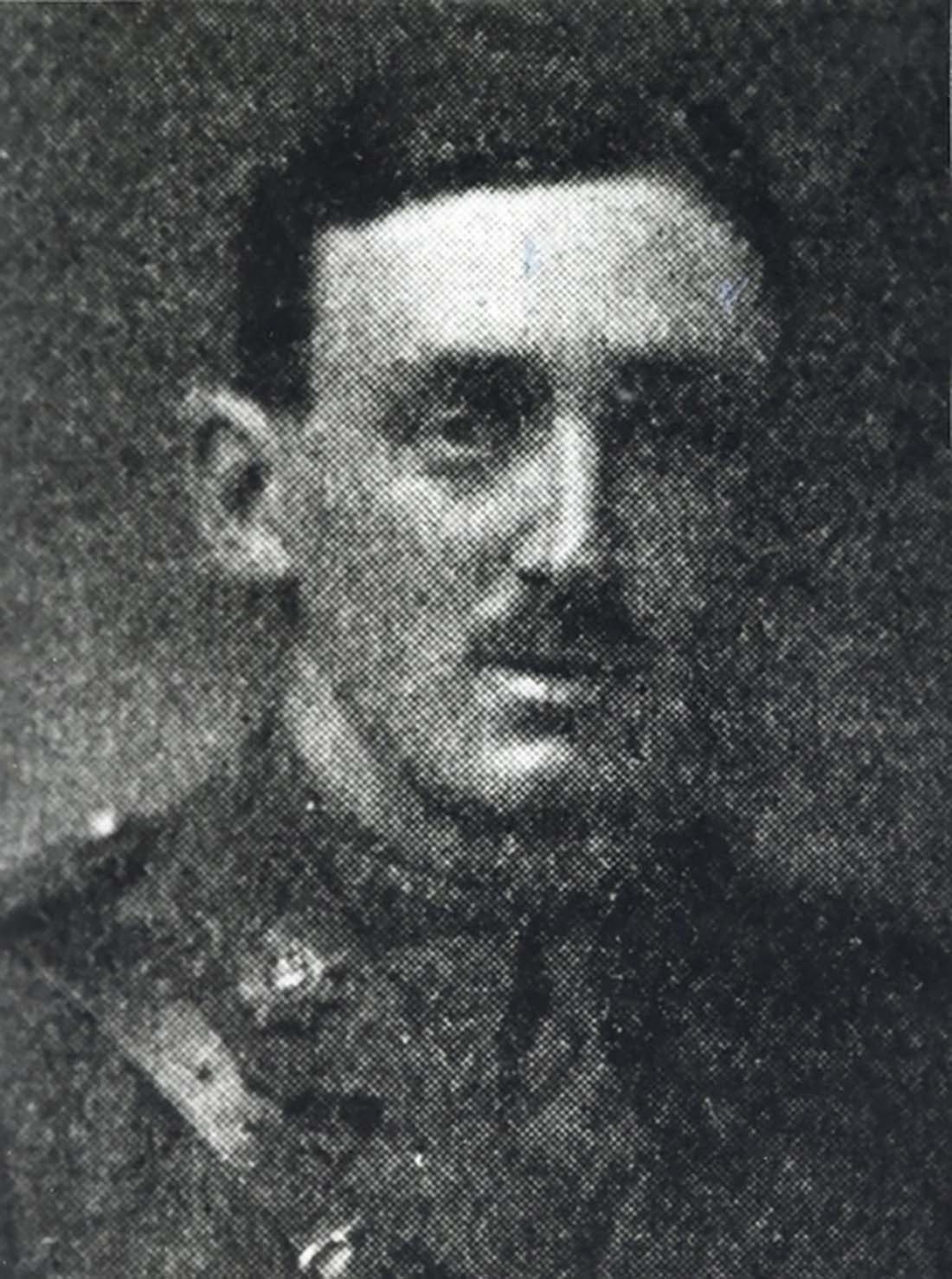
Major John Leonard Veitch MC was born in July 1887 and was the son of Peter Christian Massyn Veitch, J.P. Esq, and Harriett Veitch (nee Drew), of 11 Elm Grove Road, Exeter. Major Veitch was one of the Veitch Nursery Family, famous sponsors of plant collectors and plant hunters.
He was educated at Exeter School before going to Kew Gardens from 1908-1910 and then joining the family business in 1910. He also spent time studying horticulture in Germany and Holland.
In his spare time he was a keen cricketer and hockey player, John first played rugby for the Exeter senior team on Boxing Day 1912.bHe then appeared regularly as a wing-three-quarter or as a half-back until January 1914, when he broke his leg whilst playing scrum-half against Bridgwater Albion.
He was also secretary and a leading player of the Devon Hockey Club.
By the start of World War One, the Veitch family had changed the British gardening landscape.
They had introduced new plant species into gardens all over the country and started the Chelsea Flower Show. By the time of WW1 they had been responsible for introducing an astonishing 1281 plants which were either previously unknown or newly bred varieties.
These included 498 greenhouse plants, 232 orchids, 153 deciduous trees, shrubs and climbing plants, 122 herbaceous plants, 118 exotic ferns, 72 evergreen and climbing plants, 49 conifers and 37 bulbous plants.
In the years to come, more plants followed.
John enlisted in August 1914 in the 7th Cyclists Battalion of the Devon Regiment, his local regiment and saw front line service in France, being wounded at Vimy Ridge, and then Italy before returning to France.
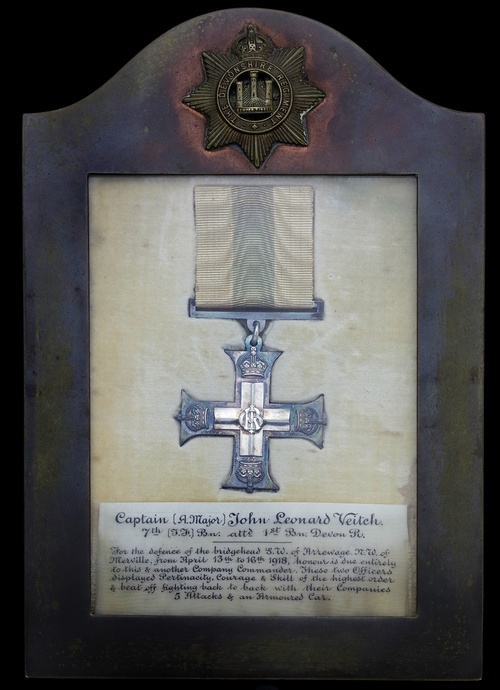
He was in France from 1915, noted as being on front line duties since December 1915 and fought through the battle of the Somme in 1916. He was wounded in the shoulder at Vimy Ridge. John was awarded a Military Cross in 1918 for his excellent defence of a Lock, just east of the Forest of Nieppe, in the middle of April, when he stopped five attacks.
The citation for his M.C. in the London Gazette of 16 September 1918 stated:
'For conspicuous gallantry and devotion to duty. He and another company officer, with their companies, defended a bridgehead against five enemy attacks and an armoured car. Under heavy shelling they displayed courage and skill of a high order, and did most valuable service.'.
John was killed on 21 May 1918 aged 31.
In a letter to John's father from his Company Commander he said that "John had the honour of dying in temporary command of our famous battalion.”
A fellow officer wrote: "Since December 1915 and almost without a break he was doing front line work. Cool and resolute, if anything too daring under fire, sound judgement and clear in administration, he was the type of infantry officer who is only produced by years of active service. I need not speak of his enthusiasm for his County regiment, nor for his keenest in all sports, especially Rugby football. H was a true Devonian and a gallant soldier".
He is buried at Thiennes British Cemetery.
The German offensive of April 1918 pushed the front line back almost as far as St. Venant in this sector and Thiennes was one of the cemeteries made for Commonwealth burials arising from the fighting in the area.
It was started by the 5th Division in May 1918 (when John was amongst the first to be buried) and used by the 59th and 61st Divisions before being closed in August 1918. It is a small cemetery of only 114 First World War burials. John's grave being the first A1.
Another Devonshire Regiment man, Private Harold Harrison, lies buried beside him, killed on the same day.
Like a lot of families John's death must have seriously affected the future of the Veitch Nursery business.
The Chelsea branch of the firm ceased to trade in 1914, whilst the Exeter business continued under Peter C.M. Veitch and later his daughter Mildred.
Failing health obliged her to sell the firm in 1969, when it was bought by St. Bridget Nurseries, Exeter.
For nearly twenty years it was run as a separate business, but is now a non-functioning subsidiary of St. Bridget’s. .
DONATE TO OUR CHARITABLE FOUNDATION
Your donation supports projects like this one, which educate and involve future generations in remembering those who fell in the two world wars. Your support helps us keep their stories alive. Thank you.
